Most Mesa homeowners dread the sound of a struggling garage door, usually because they assume a malfunction means a $2,000 bill is right around the corner. While the Arizona sun beats down on your driveway, the decision to patch up your current door or invest in a brand-new system comes down to a specific “math of exhaustion”—calculating when the cost of frequent desert-related repairs finally outweighs the value of the door itself.
Quick Decision Matrix
- Single Broken Spring: Repair (Replace both springs at once).
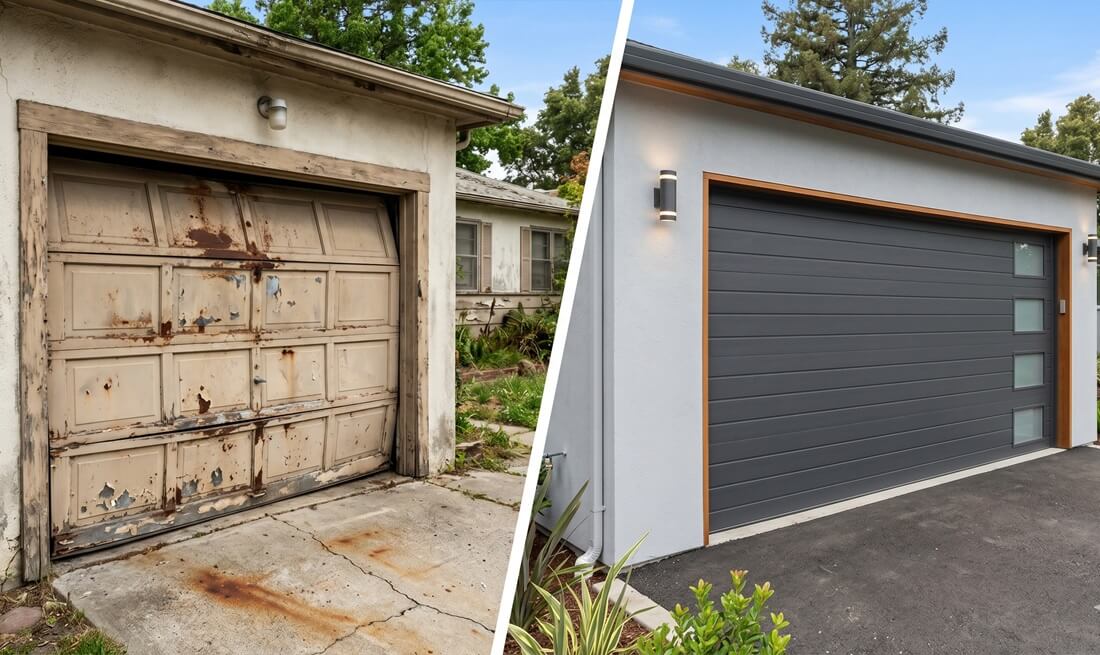
- Deep Structural Rust/Cracks: Replace (Safety and integrity are compromised).
- Cosmetic Sun Fading: Repair (Paint or panel restoration).
- Repeated Motor Failure: Replace (Modern openers handle heat better).
Average Repair and Replacement Factors in Mesa, AZ
In Mesa, we don’t just deal with standard wear; we deal with thermal expansion. During a July afternoon, the metal in your garage door can reach temperatures exceeding 150°F. This causes the tracks to expand and the lubricants to liquefy and run off.
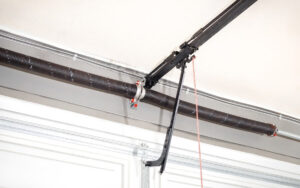
When we talk about price, repair costs usually cover specific “failure points”—a snapped cable, a burnt-out capacitor, or worn-out rollers. Replacement costs, however, involve the “entire ecosystem”: the door sections, the track system, the spring assembly, and often the opener. In areas like Dobson Ranch, we see many original doors from the 80s and 90s. At that age, the cost of replacing the springs, rollers, and cables individually often totals nearly 50% of a new door’s price, making replacement the smarter financial move.
Why Prices Vary: Standard vs. High-Cycle Parts
Not all parts are created equal, especially in the desert.
The “Cheap” Trap: Standard-duty springs are rated for about 7,000–10,000 cycles. In a busy Mesa household, you’ll burn through these in 3 to 5 years.
The High-Cycle Advantage: We often recommend 25,000 or 30,000-cycle springs. While the upfront cost is higher, the “cost per year” is significantly lower because they won’t snap during a monsoon-season temperature swing.
Labor and Logistics: Emergency fees in Mesa can spike during the summer months when technician demand is at its peak. Planning a replacement in the “shoulder seasons” can often save you on scheduling premiums.
The Financial Logic: Repair vs. Replace
I tell my clients in Las Sendas to follow the 50% Rule: If a single repair cost exceeds 50% of the price of a new door, or if you’ve had more than two professional repairs in the last 24 months, you are throwing good money after bad.
Mesa’s climate accelerates the “fatigue” of steel and wood. If your door is over 15 years old, the insulation (if it has any) has likely degraded, and the metal has gone through thousands of expansion/contraction cycles. A new, high-R-value insulated door doesn’t just look better; it can actually lower the temperature in your garage by 20°F, reducing the strain on your home’s AC system and potentially saving you more on utilities than the repair would have cost.
Expert Quote:
If you decide to keep your current door, stop using grease on your tracks immediately. In Mesa, our desert dust acts like sandpaper when it hits wet grease, creating a grinding paste that destroys your rollers and puts massive strain on your motor. Instead, use a high-quality silicone-based or Teflon spray on the hinges and springs only. Leave the tracks clean and dry. This simple switch can add two to three years to the life of your hardware before you’re forced into a replacement.